

Tirana's Red Revolution
Anti-government protests on the streets of Albania's capital city

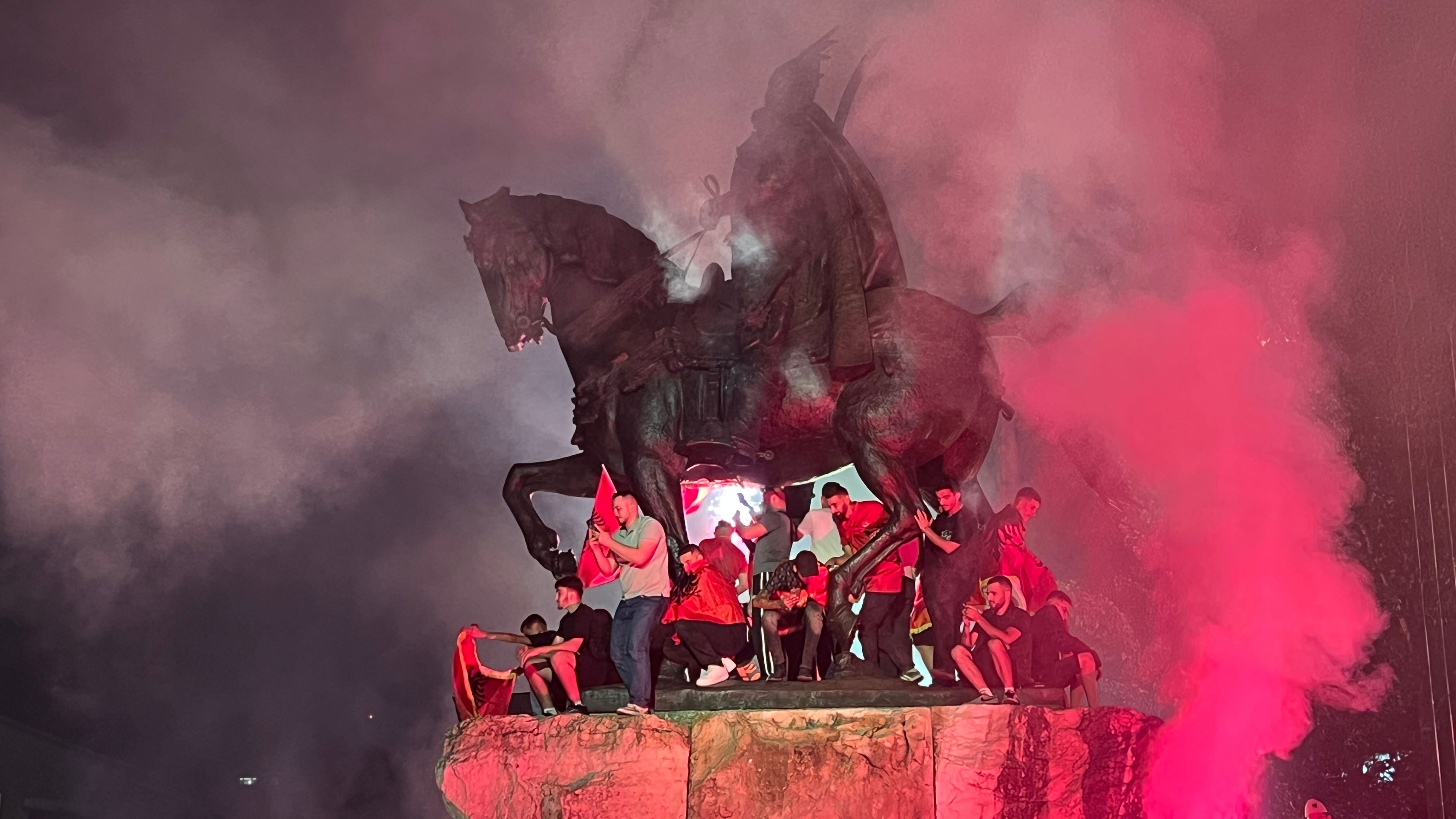
Red flares light up the underbelly of the giant bronze horse statue, on top of which, the Albanian national hero Skanderbeg rides. Surrounding the legs are crouched young men calling for “REVOLUCION”, waving giant flags and working the protesters below into a frenzy.
At one point, hundreds of people jump in unison, as more red flares are set off at ground level, and yet more protesters climb the giant bronze horse.
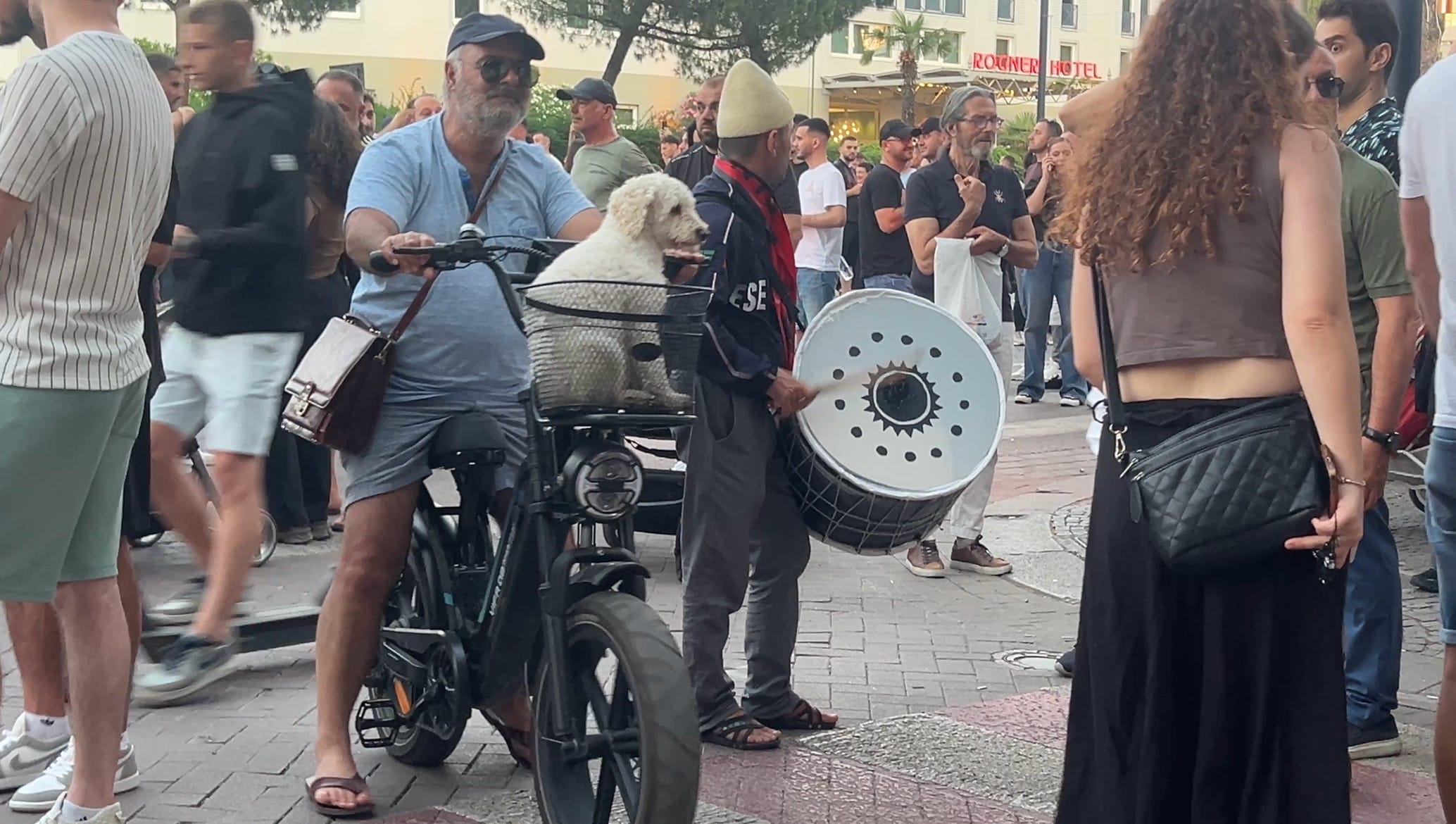
In late evening light, protesters amassed along Bulevardi Dëshmorët e Kombit in central Tirana for the 14th consecutive night. Young kids too waved the flag and jumped up and down. Old men rode bicycles amongst the crowd, weaving their way with dogs in baskets and bags of shopping.
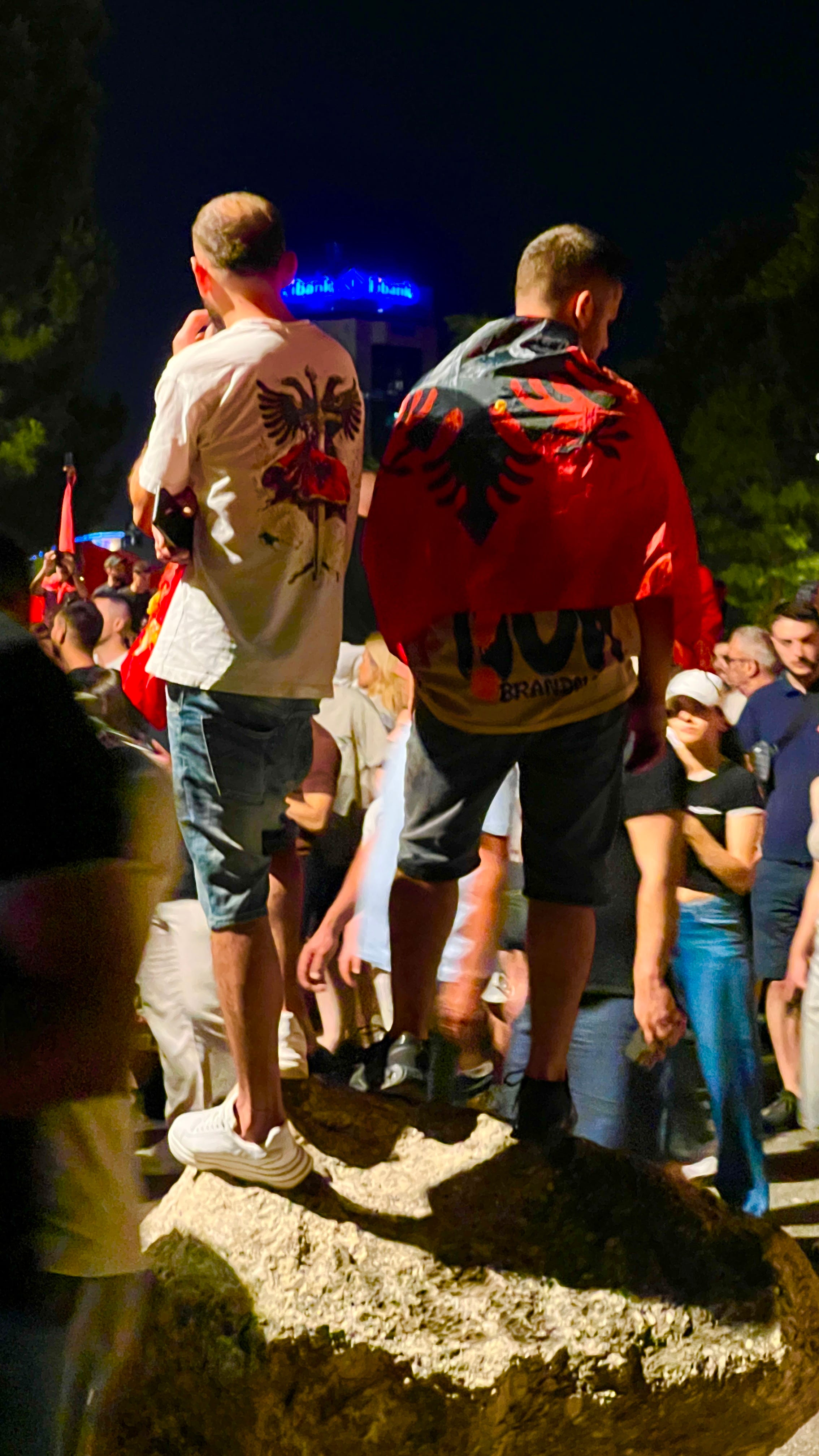
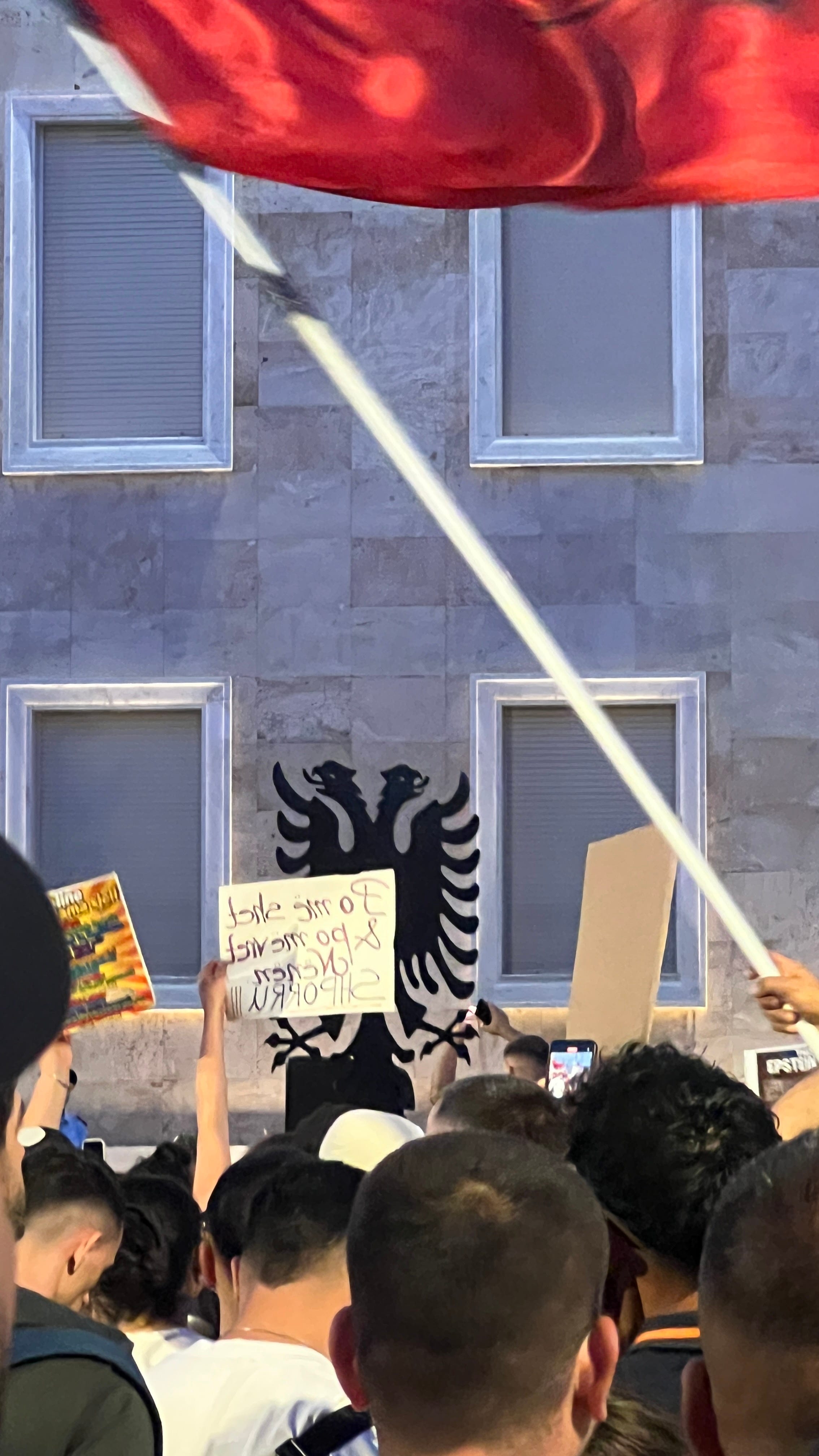
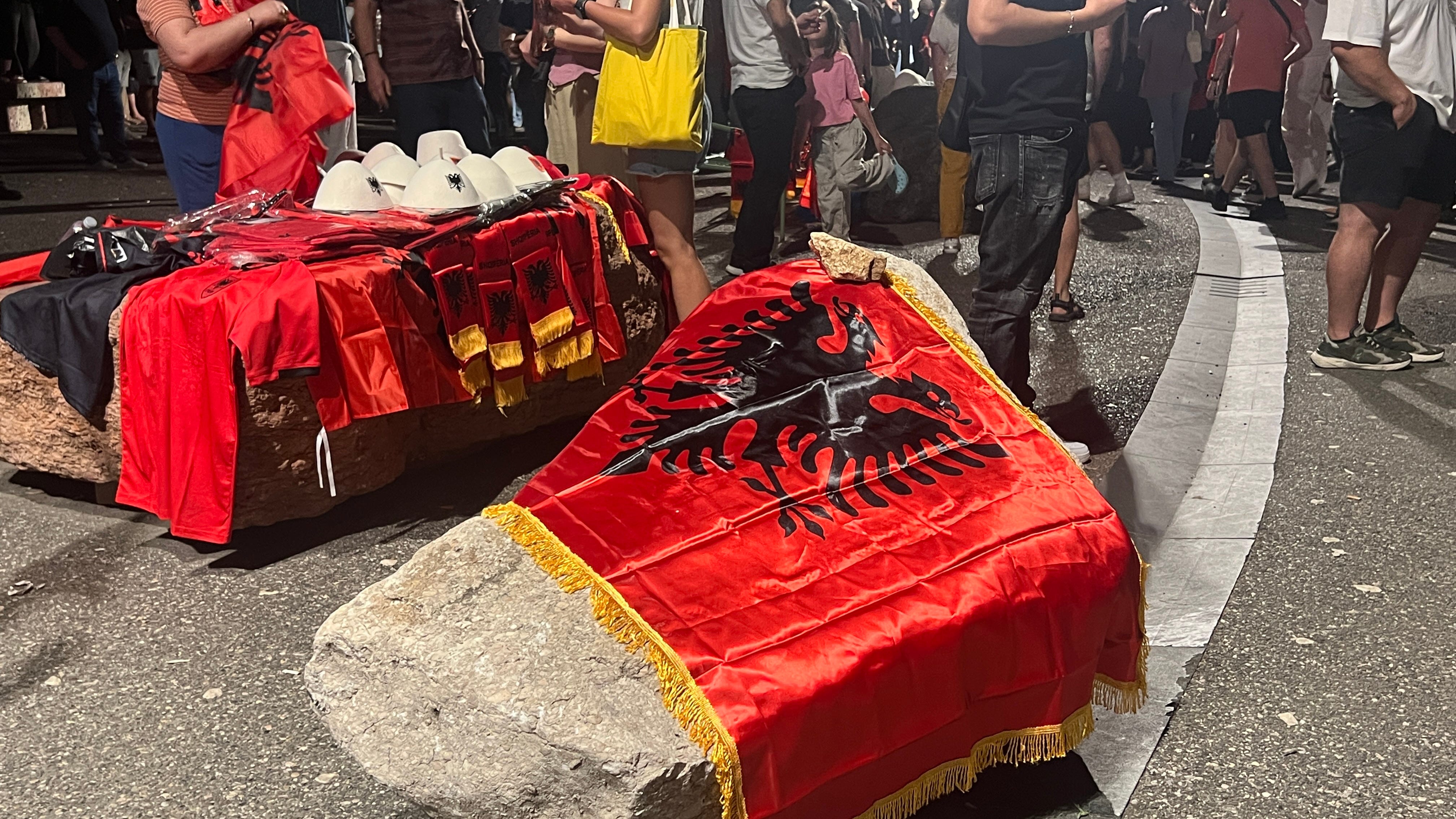
As night arrives, the red flag - with its black double-headed eagle insignia - multiplies. Small ones, large ones, gold-fringed ones, draped-over-shoulder ones, waved on telescopic pole ones, suspended in mid-air by a drone one. They fill every sight-line. The density of them whips the crowd into a chorus of whistles, horns, drums and chanting. Wooden and cardboard flamingos and pelicans bob up and down amongst a sea of signs and placards depicting Prime Minister Edi Rama in various compromised posiitions: humiliatingly stood inside an inflatable flamingo.
The “Flamingo Revolution”, is so called because the Vjosë Narte Delta near the Albanian coastal city of Vlore, is a vital migratory nature reserve that’s a home to flamingos and pelicans alongside seven threatened species of birds (Convention on Migratory Species) and over 200 species in total.
In its pursuit of rapid development, the Albanian government is selling it off to private developers including Jared Kushner - of Trump fame, as well as Israeli and Arab investors. Plans include an airport, new tourist developments along the coast, and a luxury island.
In this location, the impact will be massive and permanent.
Over the last two weeks, protests have grown from a small group, to hundreds, and now hundreds of thousands of people - voicing their anger and showing up for their country night after night.
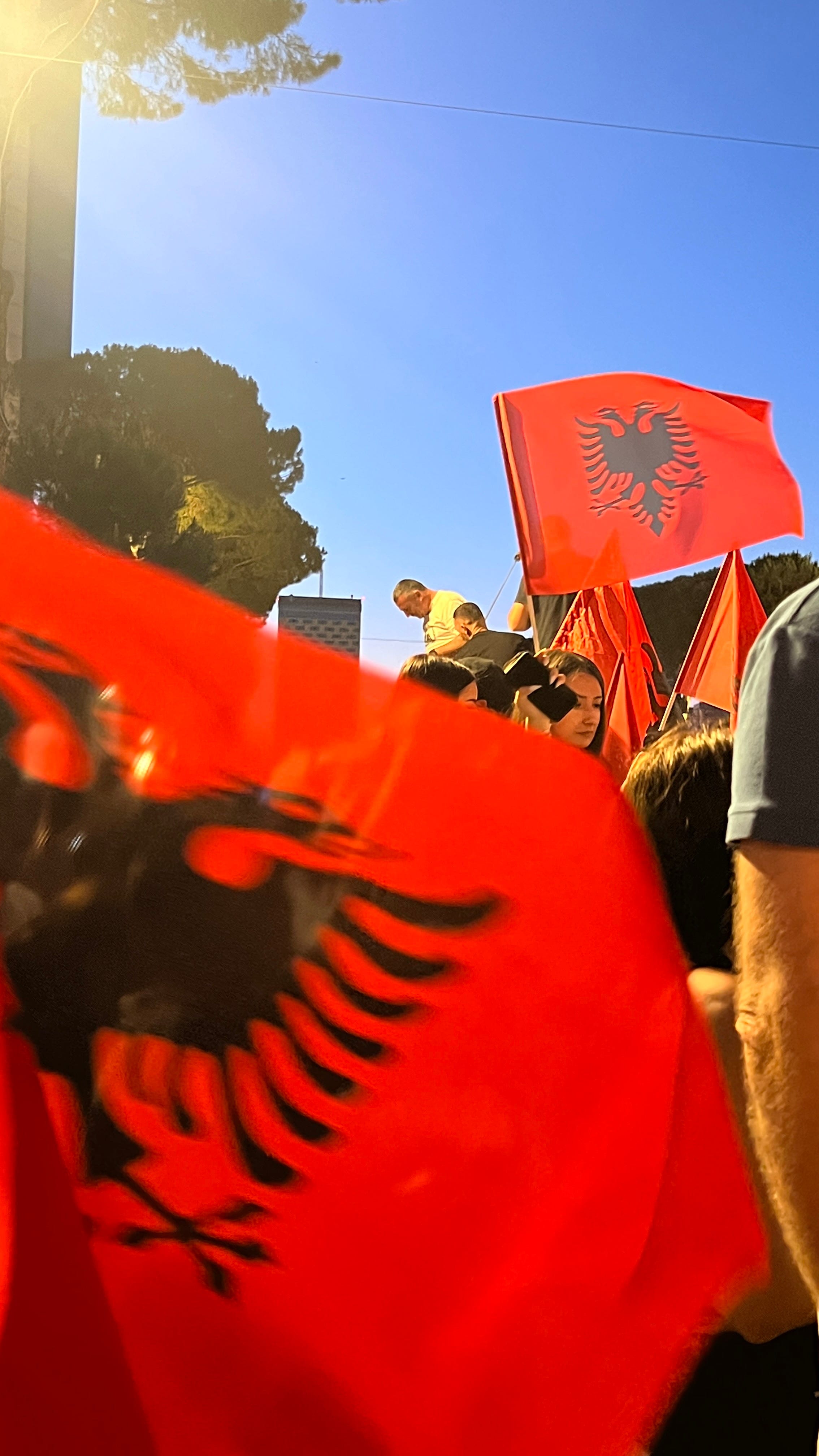
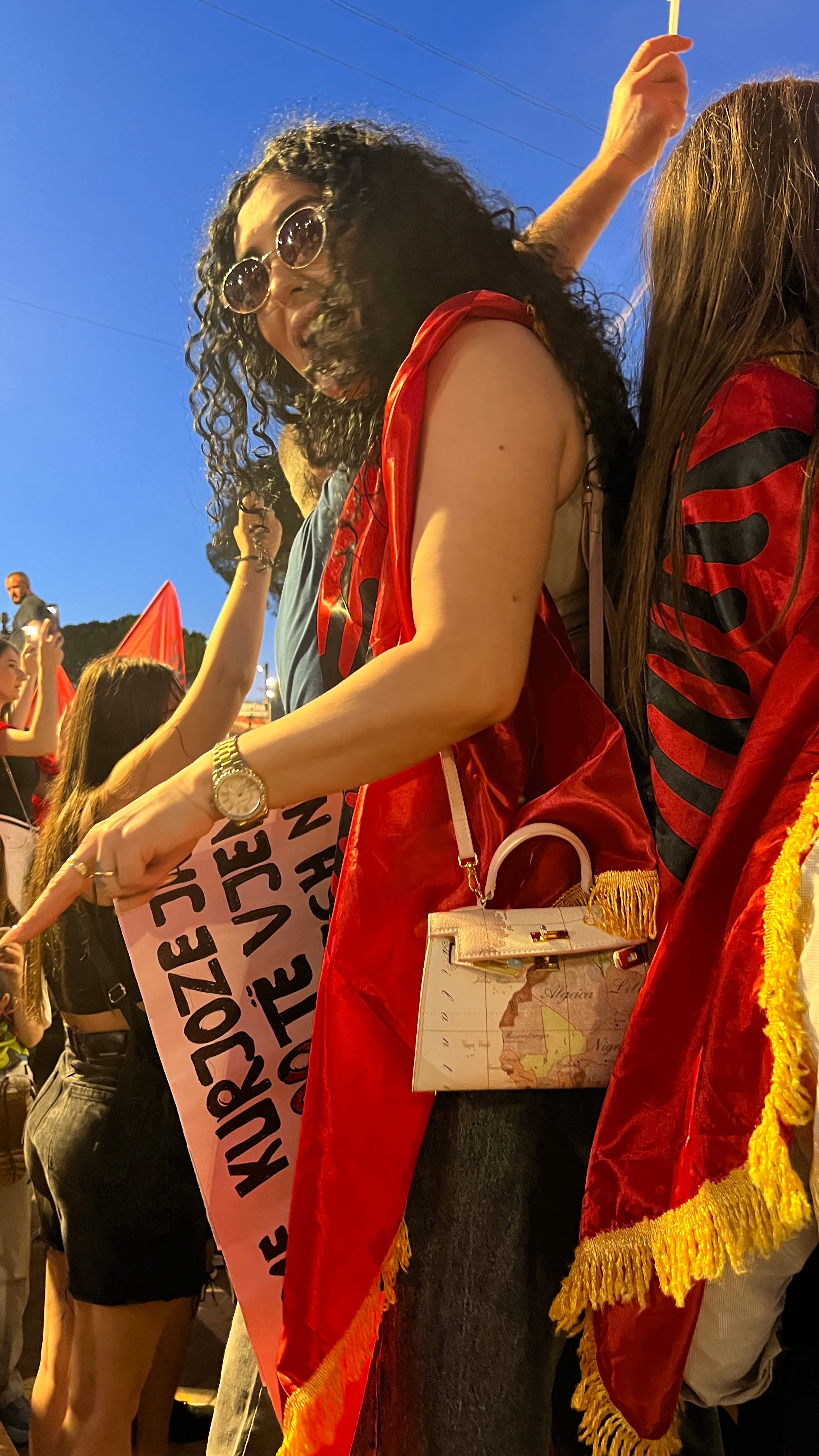
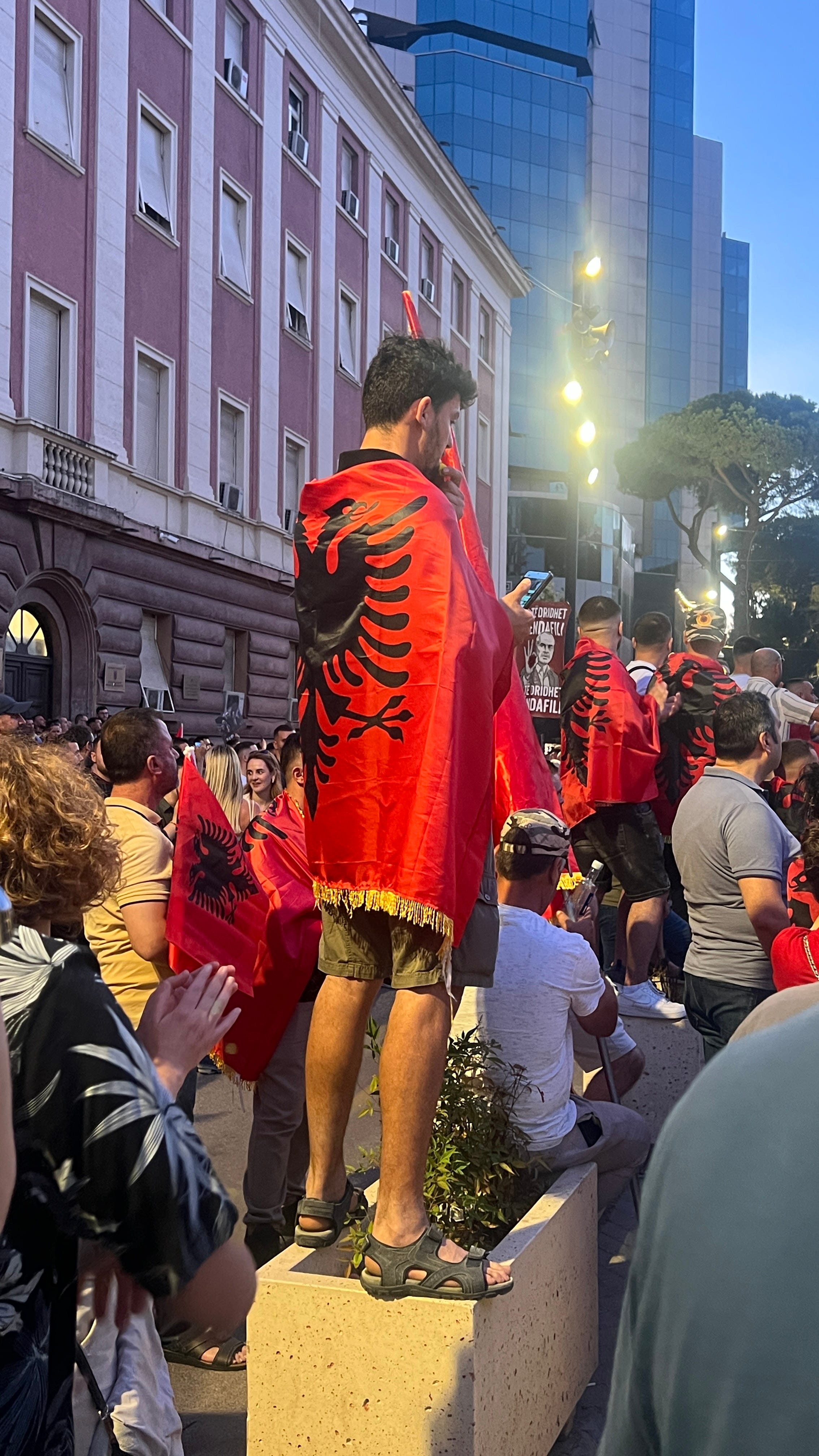
Although tensions are high, there is a clear separation between the people and the state. Discussions overheard in bars suggest that this is all in vain “Its only one street”, and an acceptance that Edi Rama is untouchable.
The Albanian Riviera
Resorts including Dhermi and Ksamil now have Ibiza style beaches. 30 Euros for a sun-lounger, packed in like sardines, afro-house music blaring competitively with the next joint. This of course attracts a good-time tourist, who spends a good amount. However, it is a volume game.
Barely visible from Dhermi beach up the mountainside is Dhermi old town. A beautiful village with red tile roofs, a bright blue dome church, and a fascinating luxury development, Zoe Hora, which has enmeshed itself as part of a living place.
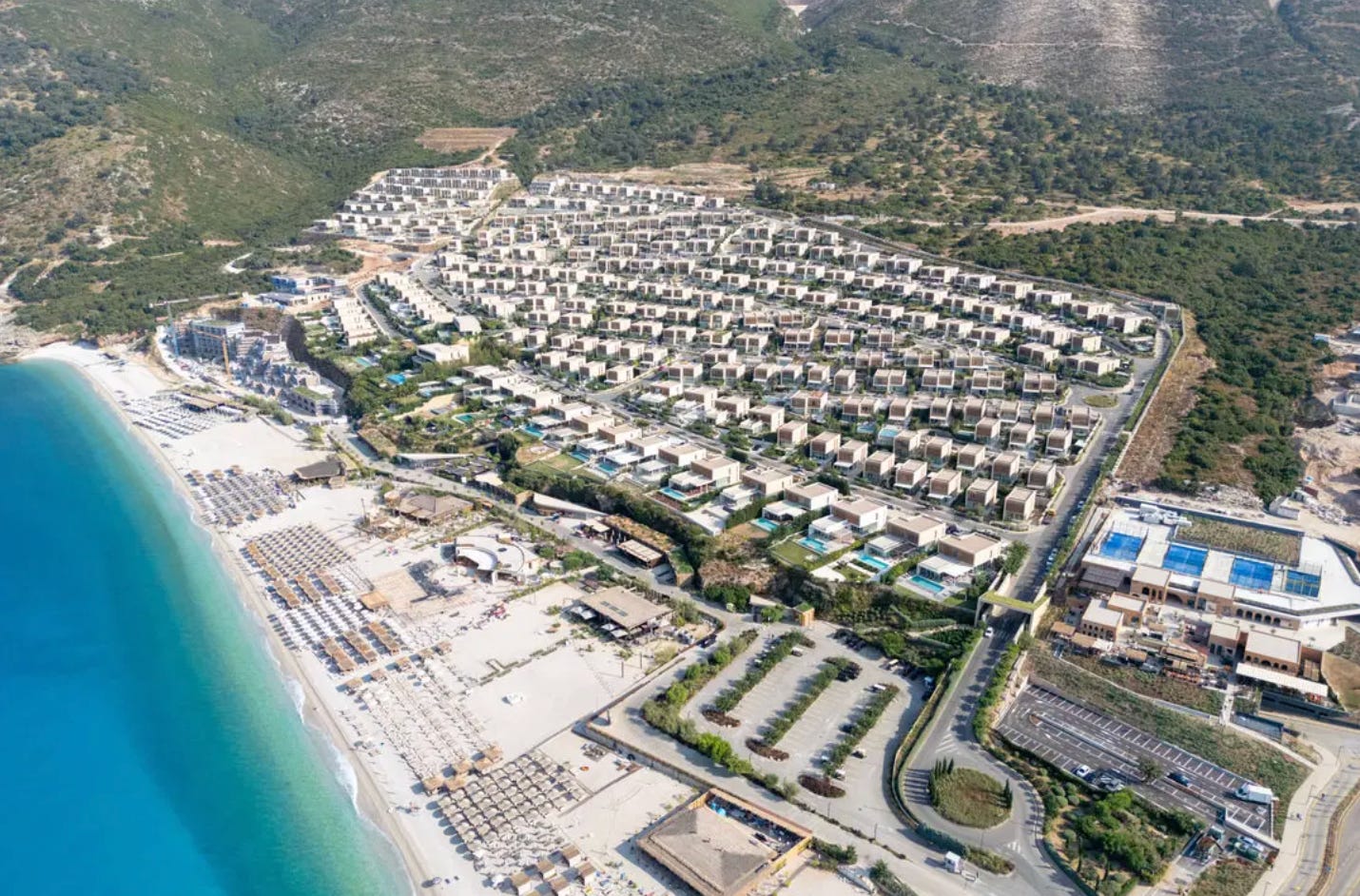
Further down the coast, another development - Palasa - is almost complete. A hillside of identikit concrete buildings. It’s an horrific affront to nature, and at a scale that defies logic. More of these are planned up and down the coast. Land is being sold off to international investors, with no hope of residents benefiting financially.
When speaking with a Tirana resident, they say “Its not about the money. It’s about everything else. Our borders - Kosovo, Montenegro. These were Albanian. The salaries are down here and the prices are up here. We don’t want to join Europe. Just leave us, we’re fine - let us be.”
The protesting Albanians feel that they are being stripped of their assets. Natural habitats for their animals, beaches they visited as kids, and like across much of Europe and the world, dealing with a cost of living crisis that has no obvious end.
Up and down Albania's coast, huge infrastructure projects are in conflict with nature. But there’s also a human cost. Lucrative investment steers decision making at every level. Proper consultation and process with land owners, scientists and nature experts fails to happen.
Tirana, in the middle of the country, is the only proper airport. If tourists want to get to southern coastal resorts the options are: a three to four hour rental car drive, a 3-4 hour furgon (mini bus) ride, or a flight to and ferry from Corfu with a drive/bus up the coast. There are no functioning trains at all. So, it does makes sense to build another airport, and most protesters agree.
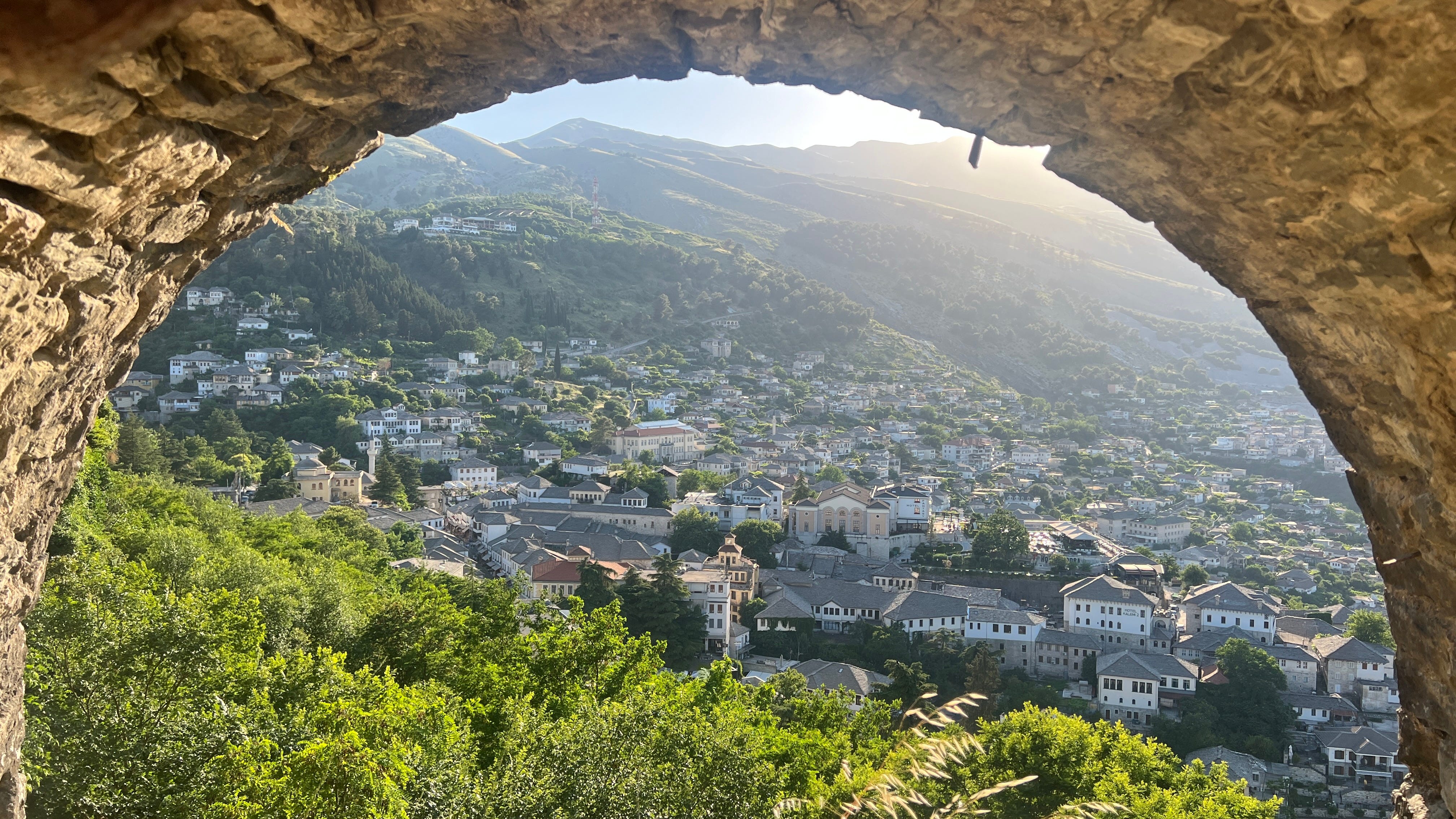
Other than the one being bulldozed into place in Vlore, there’s another planned in Gjirokaster. There, it would fundamentally damage the lives of its citizens.
The ‘stone city’ is an ancient site that climbs up mountain foothills and is situated within a large wide valley. The valley floor is flat and does already have a tiny airstrip - a remnant of war that’s currently functioning as a landing site for paragliders and very occasional light aircraft. It’s an obvious place to put an airport but the reality will be hellish if tourist passenger aircraft arrive. This quiet city, will become deafeningly loud for residents - sounds echoing around the valley where eagles also circle in the sky. Visually it would irreparably change beautiful views. The valley is long and wide, meaning the airport could be located further away, but instead the proposed location brings air traffic right into city life. It would also green light large areas of the valley floor for development. The existing city and old town could become a small speck on a mountainside.
Whilst investment is needed if Albania is to take advantage of its burgeoning visibility as a tourist destination, the current approach is incredibly short sighted.
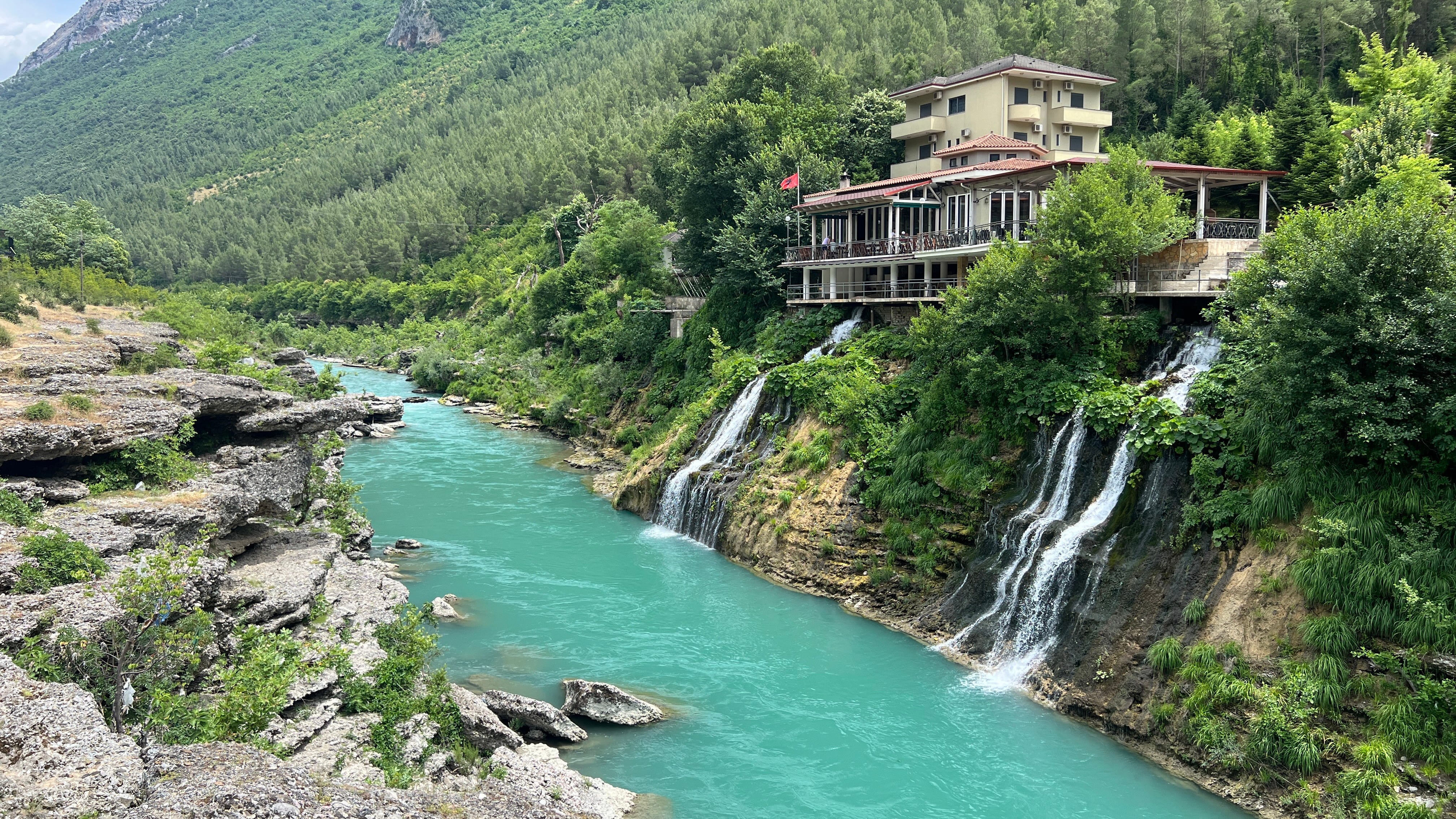
This country has so much history. Layers upon layers. From Illyria and Epirus to Byzantine and Ottomans. It’s a remarkable place, that - with willing investment - could set itself up as major cultural destination. Instead, priceless Byzantine mosaics in Sarande lie unearthed in empty rooms, with basic civic posters and images on the wall, one very helpful guide and no visitors. Beautiful villages sit semi-abandoned along the coast. They too could be brought back to life. Instead there is an aspiration toward masses of gleaming concrete, with little respect for nature.
With Albania actively pursuing EU membership, is it not the role of decision makers in the EU to actively review and steer developments now? If not, it is encouraging destruction in its name.
Robert Cameron Stevenson
Great read, and interesting to learn more about what’s actually happening over there and the feeling amongst the community. It’s not been covered enough on the news here. Sad that it feels futile, but simultaneously hopeful that so many people showed up 🫶
Thank you!! 🫶 I can hardly find anything in UK media. The Guardian has a couple of articles reporting from Athens I think. It’ll be interesting to see if the protests grow over this week… but I’ve just arrived back in Blighty