

Conversations with Strangers
Talking to strangers whilst travelling, and where it can lead

“Why Albania?” my friend asks as we sit watching a group of 20 year olds diving from a lock into London’s Regents Canal in 35 degree heat.
A man with a fishing line pulls out a traffic cone and says to me “It used to be cleaner here 10 years ago”. Slowly coming to a stop, I turn and ask “Why is that?” he shrugs and replies “It’s all these people coming here for a picnic and leaving their rubbish”. I promise him we’ll throw ours away.
Feeling strangely present after two months travelling around the Balkan nation, entering into a brief conversation with him feels entirely normal. To my friends, in dressed-down suits, I’m crossing a boundary and delaying our planned evening in the sun.
Striking up conversations with strangers scrapes against the anonymity of city life, but I wonder if I’m operating in a different mode now.
Rather than snap back to the default setting, I stay with this new one. Unwilling to let go of this feeling of openness. Fearful of misplacing it and cutting a potential thread that could lead anywhere.
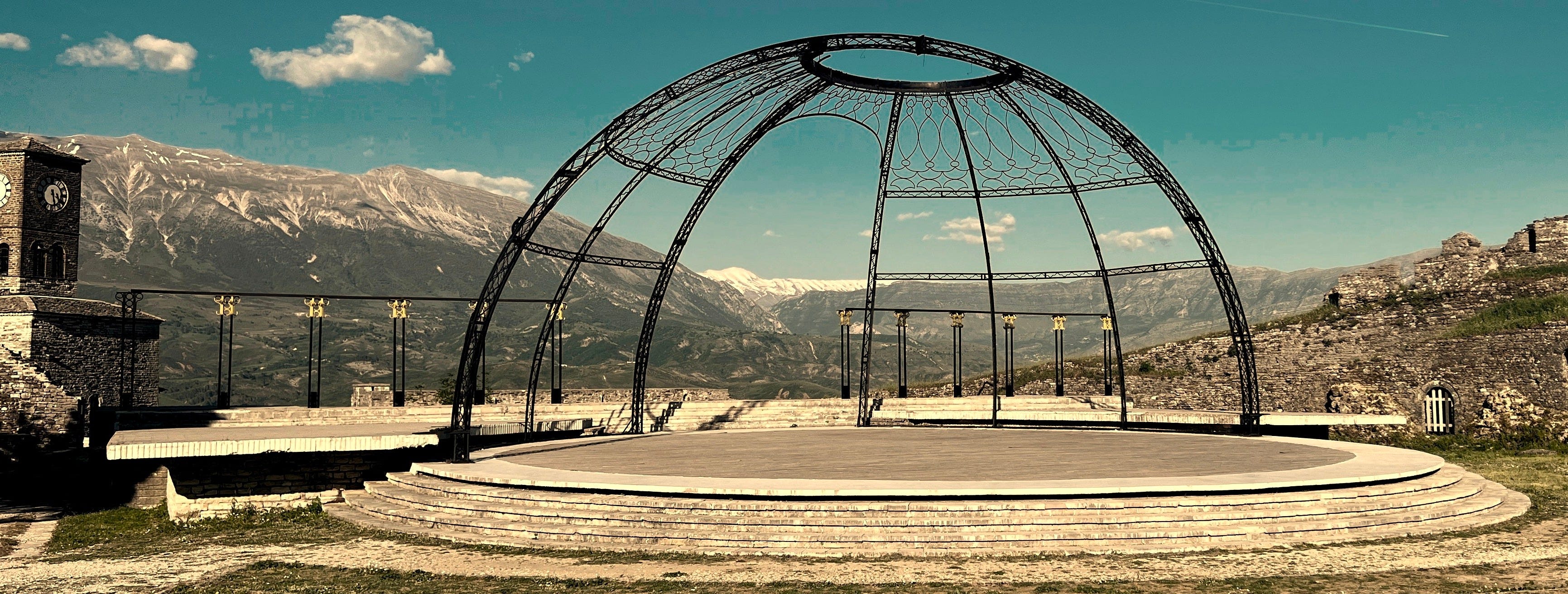
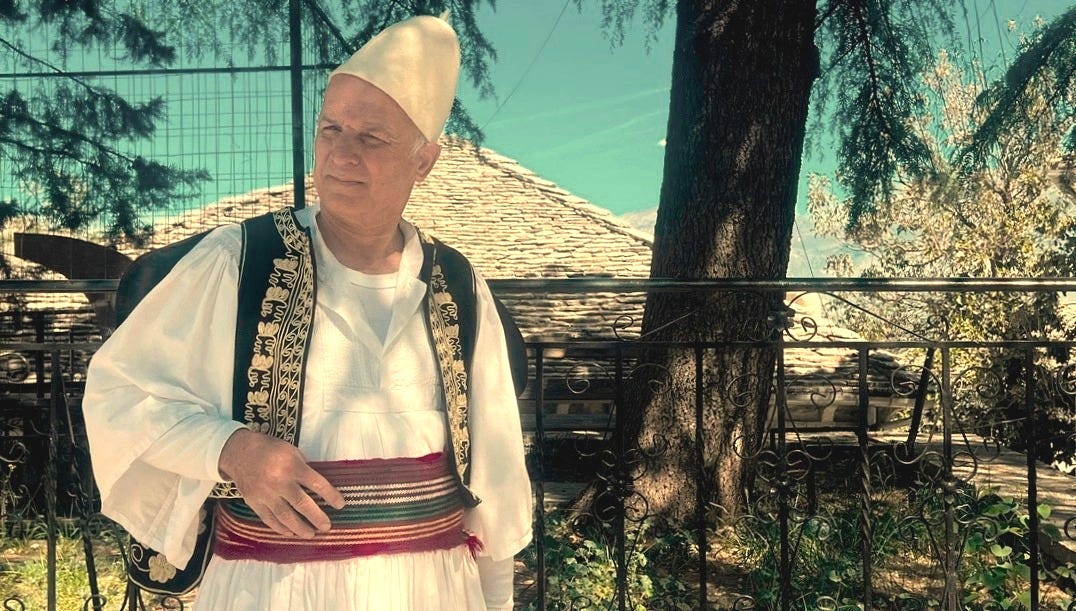
A couple of weeks earlier in a small mountain town, huge lorries blurting out thick black smoke pass agonisingly close to a small row of shuttered shops. Amongst them I spot a cafe that looks open. Darting across the road, I land in a cool empty room with tiled floors and heavy wooden furniture along one wall, a few tables and chairs and an empty bar nestled at the back. Albania flags sit in a vase on a low table in front of it. Old black and white photographs hang on the wall around a large TV. Un-caffeinated, it takes a few moments for me to realise the traditional music playing is in the realm of iso-polyphony and - having seen it recently - I recognise the stage: Gjirokaster folk festival.
Standing in the middle of the room I wait, entranced by old black and white video, locked into the droning sound.
An elderly man emerges from the backrooms. I ask him if he’s doing “menges” (breakfast). Proudly opening an oven containing a tray of fresh byrek, he offers me an espresso and a seat on the small terrace.
As lorries hurtle past, I gesture to the TV and ask him if he likes iso-polyphonic music. Communication is very limited, so reaching for Google Translate, I type that I’m here filming a documentary about it.
His eyes light up and I come to understand that his name is Akrem, he is a retired policeman and a lyricist. He gestures for me to stand up and come to the TV. With the remote in hand, he searches for music videos that he has written songs for. In truth, they’re not exactly what I’m here for - veering into traditional-modern-pop territory. The videos clearly have a budget.
Before long he’s making a phone call to a friend and handing me the phone. The man on the other end speaks no English and we talk awkwardly over one another. The phone passed back and forth as I explain I can’t understand him. He manages to tell me his daughter speaks English and will translate messages. I end up with the man’s name - Gentjan - and his phone number, as well as the number of Akrem’s other friend who is the president of a local TV station.
I stay for half an hour, eating the soft, crispy byrek and drinking a second espresso. Outside I ask him for a photo. A truck nearly ploughs into us as we stand on the edge of the road. I leave with the feeling that we’ll meet again one day.
Later I leave a WhatsApp voice message for the man I spoke with. He writes back a long message introducing himself and explaining that he is a journalist of cultural and spiritual heritage, has made over 200 documentaries and reports, has his own studio with an array of equipment and has lots of contacts with iso-polyphonic singing groups and will arrange for us to meet.
My first inroad into iso-polyphony in Albania was via a fixer. With a significant language barrier and aiming to film a practiced tradition, I thought it wise to set things up with an interpreter who could get me off on the right note… finding a singing shepherd on a mountainside alone was probably going to be a bit of a stretch.
The second lead came on my ninth day in Gjirokaster. I reluctantly went into the tourist office and at first it was everything I expected. The young man named Theo behind the desk was busy serving German and Dutch tourists, when it was my turn to ask what I could do he reeled off his usual “cookery course” and “woodworking”… maybe I looked unimpressed. When I told him about the documentary he dropped everything. Before long he had put me in touch with his old boss, the Mayor of another town, who knew iso-polyphonic singers. A few messages later and I had a meeting set up. I met Theo for a drink later on and we’ve exchanged messages ever since.
Whilst these leads have been great, the third - at the roadside cafe - came from me pulling a thread without any structural help. I felt like I’d truly struck out on my own.
In Albania I've been afforded countless conversations with people. At coffee shop counters, in restaurants and bars, at bus stops, with hotel receptionists, shop assistants, museum workers, and shepherds. A taxi driver told me how he spent four years living illegally in Leeds. At a counter in Tirana, the morning after a protest, a young man told me about trying to bring his Filipino wife and their baby into the country - he was told to leave for three months and pay 2,000 Euro in order to have the case reviewed again. I’ve been talked with people about political corruption, paying doctors backhanders, life under Enver Hoxha’s regime, emigration, religion, history, climate change, over-tourism, heart and brain surgery, animals, holding down three jobs (not me), sport, music, and much more.
Later at the canal side, I’m asked by another of my suited friends “Why Albania?”. This time I take a moment longer to answer. Yes, my intention was simply to hear this music in real life, but the reason to stay for two months became something else. Looking over to the man continuing to fish out rubbish from the water, I answer “I kept finding myself in conversations with strangers”.
Robert Cameron Stevenson
Synthetic Response
I’m making a documentary film about iso-polyphonic music in Albania. It’s an ancient choral singing tradition rooted in mountain cultures. The tradition is listed as “at risk” on the UNESCO intangible cultural heritage list. This is partly due to the large number of young emigrants seeing economic opportunities. Heading to cities such as London and Athens, these traditions can quickly disappear - especially as many practitioners are elderly, and the music is often disregarded in favour of contemporary Western music.